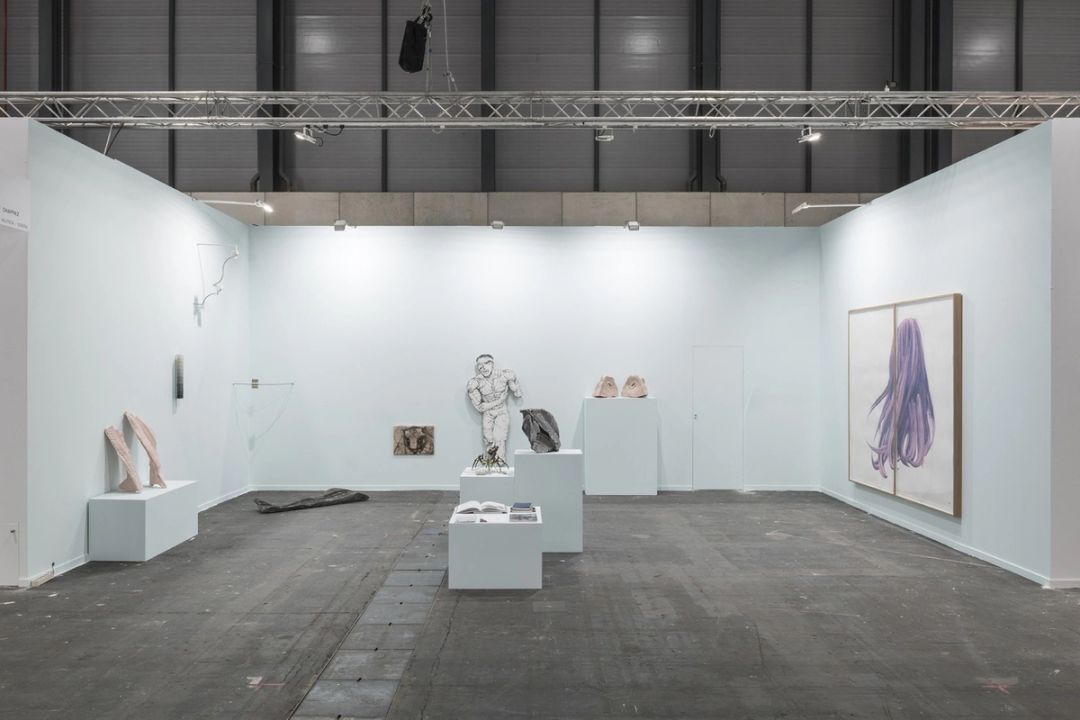
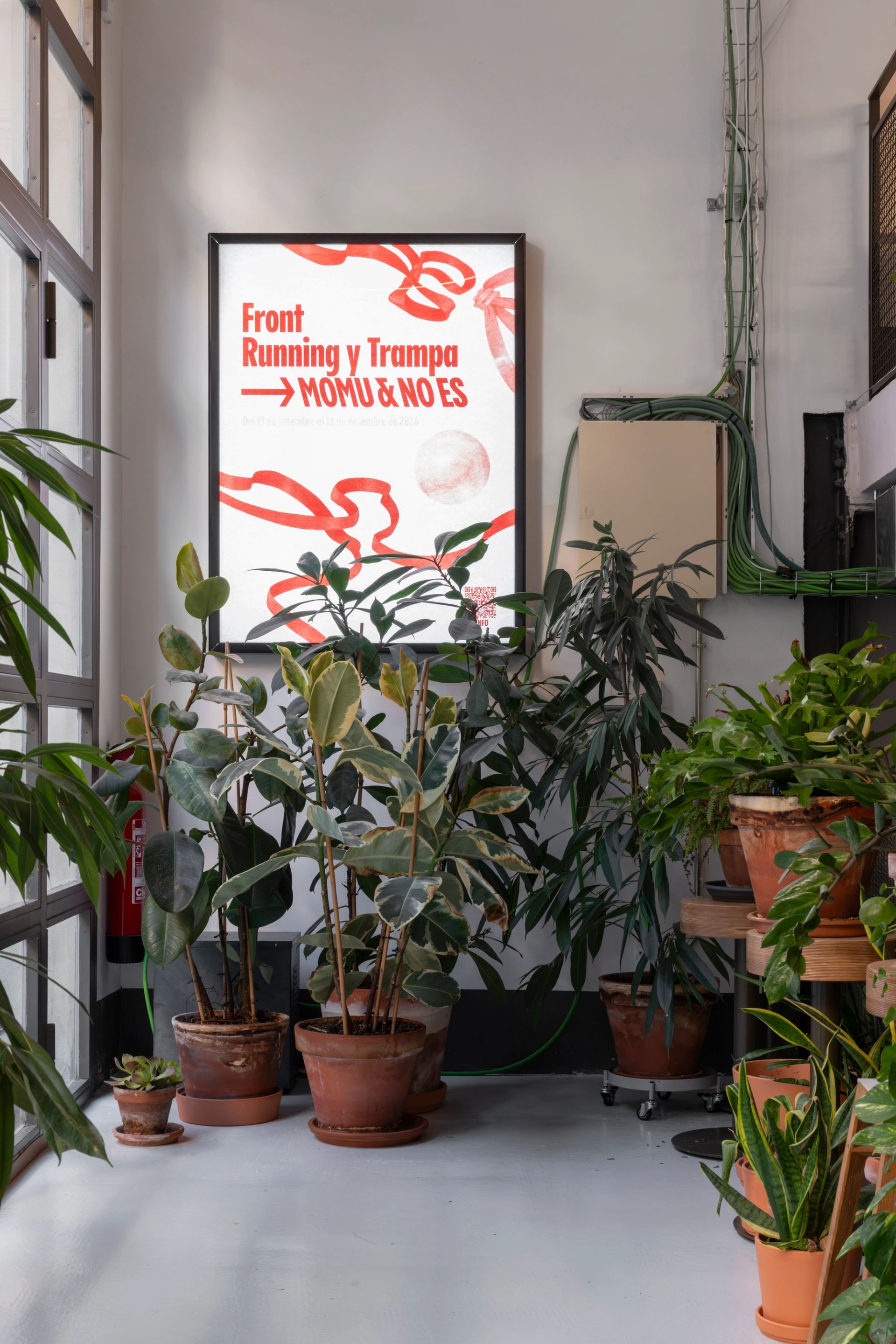
Front Running y Trampa
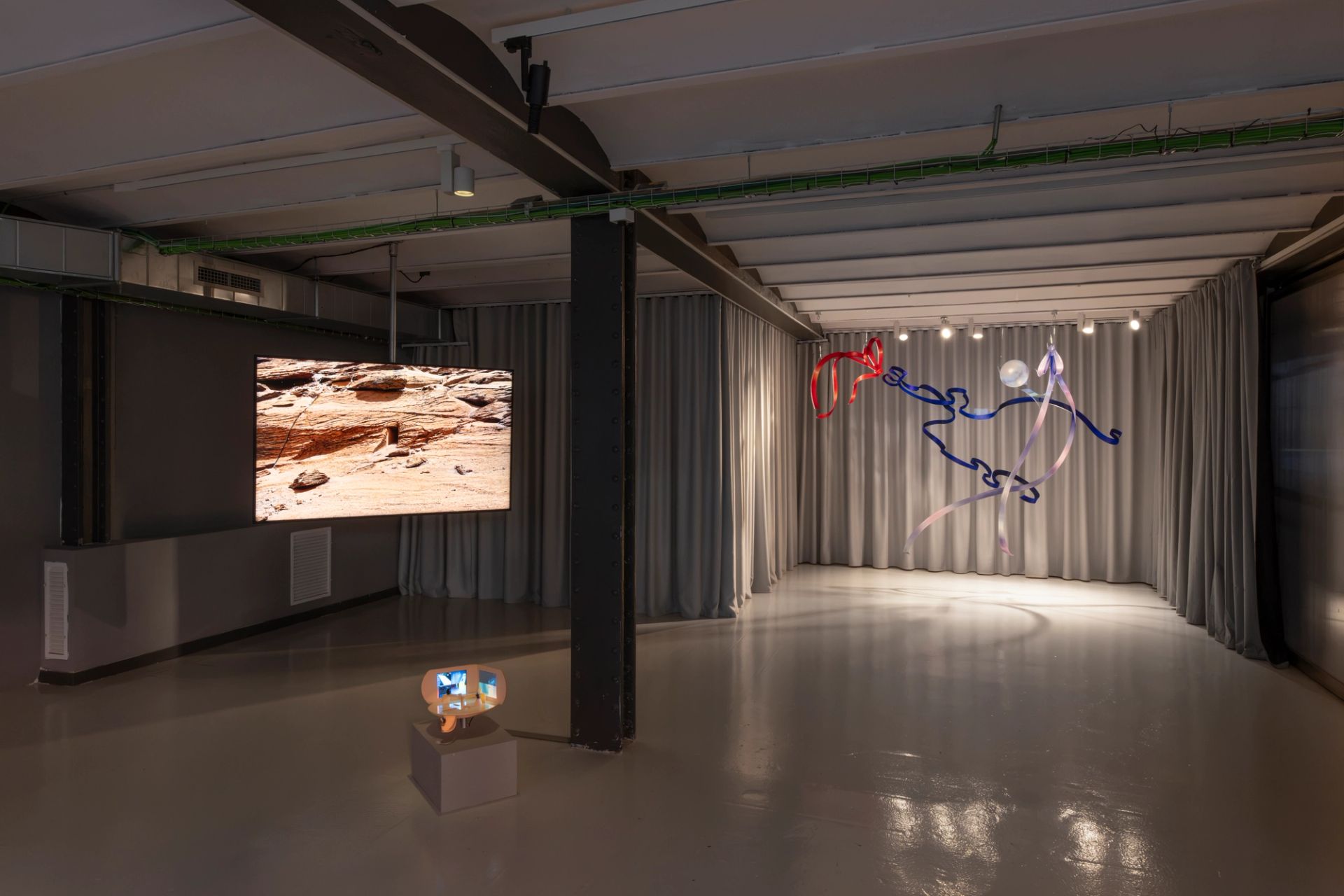
Hesitation, Speculation, Extraction, Metamorphosis, Conjuring
“Matters matter: what matters we use to think other matters with; what stories we tell to tell other stories; what knots knot knots, what thoughts think thoughts, what descriptions describe descriptions, what ties tie ties. It matters what stories make worlds, what worlds make stories.”
Donna Haraway, Staying with the Trouble: Making Kin in the Chthulucene (Consonni, 2019).
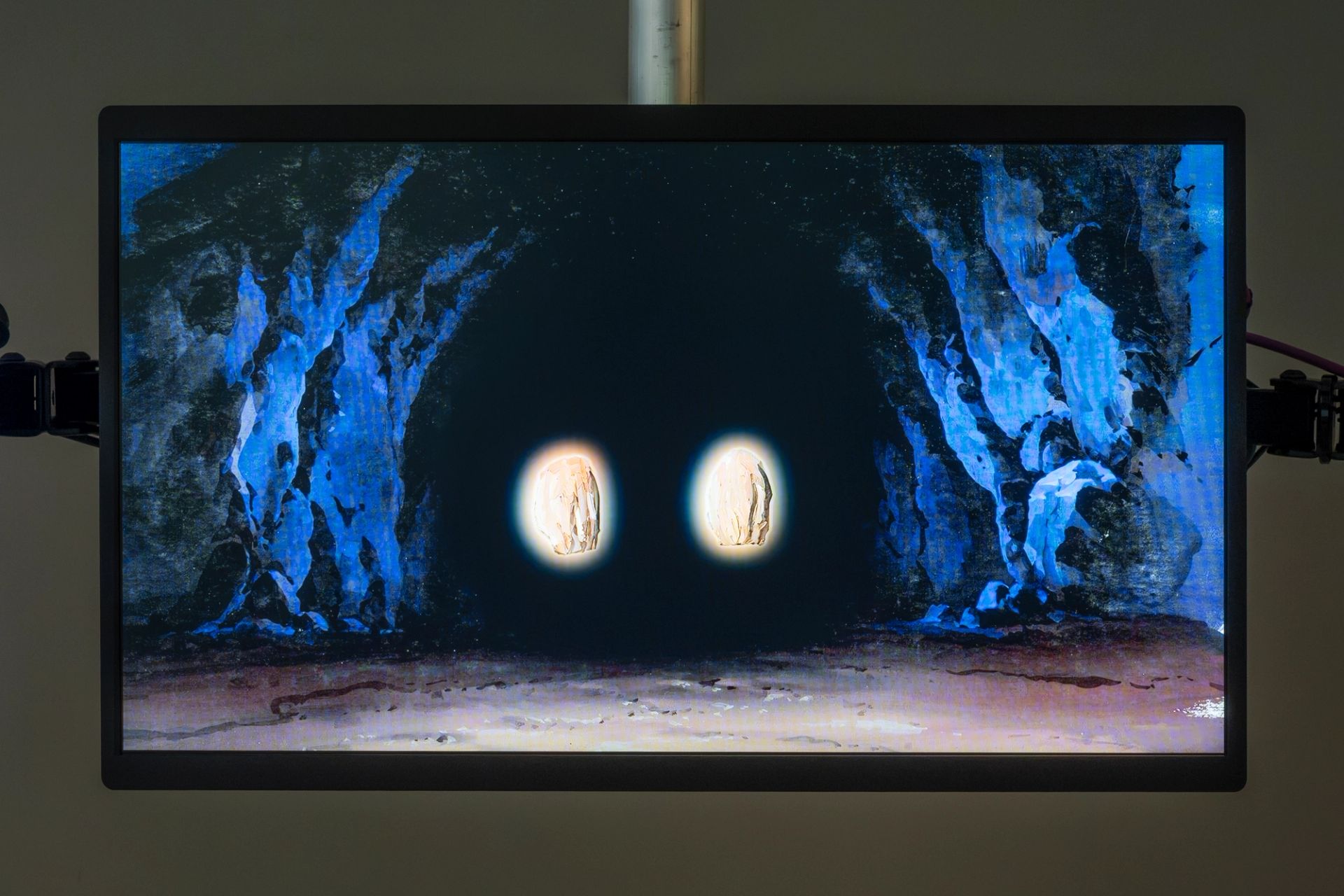
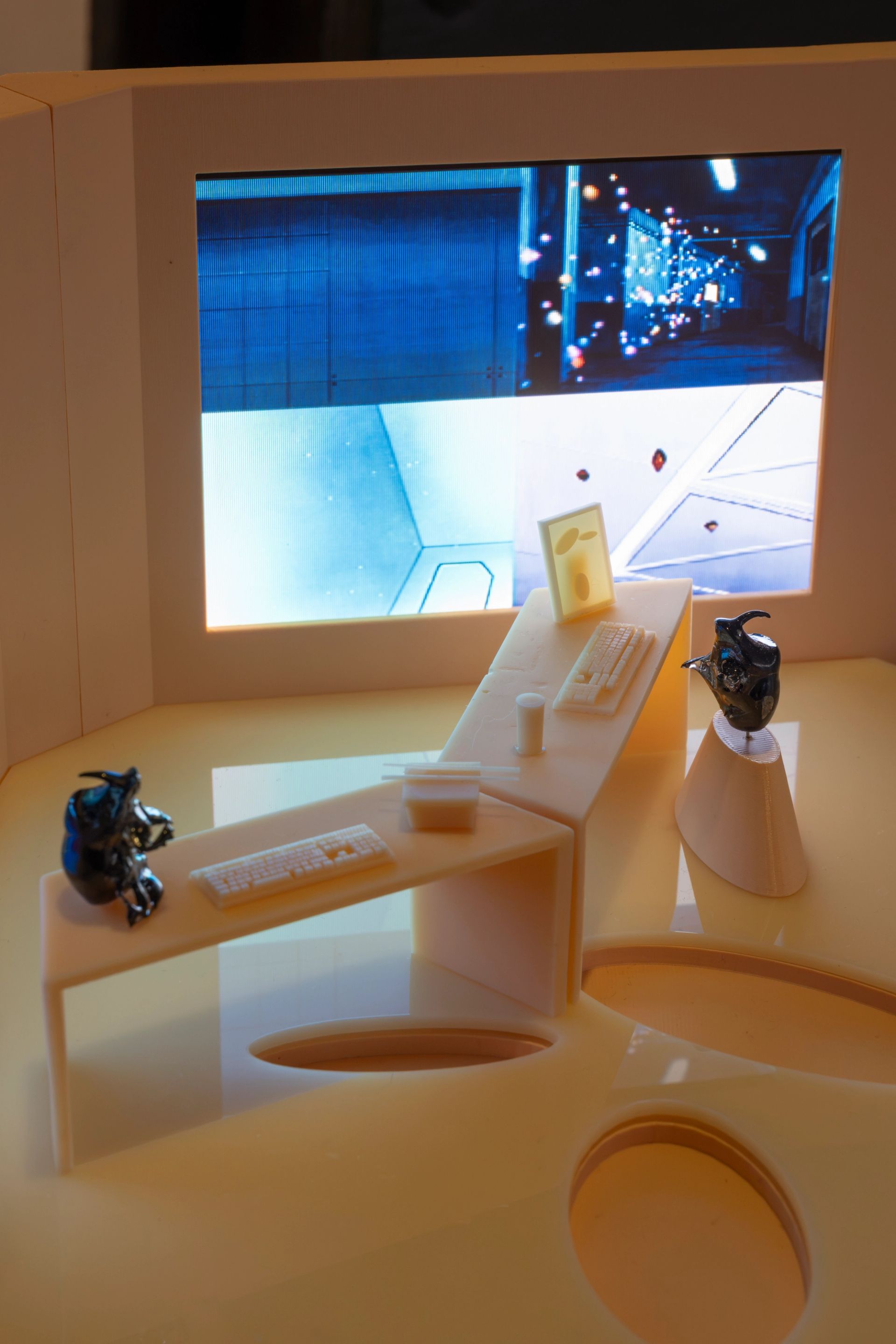
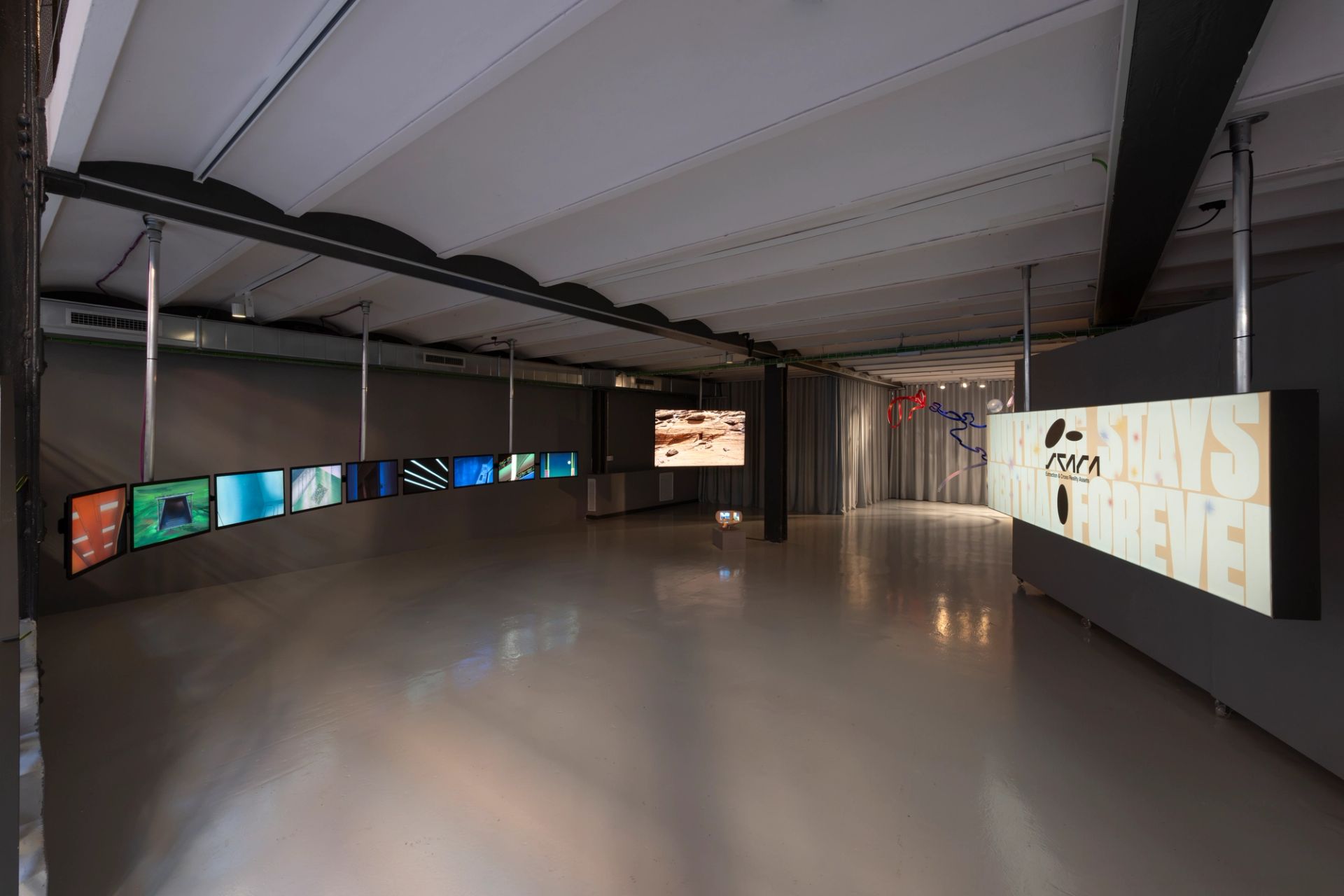
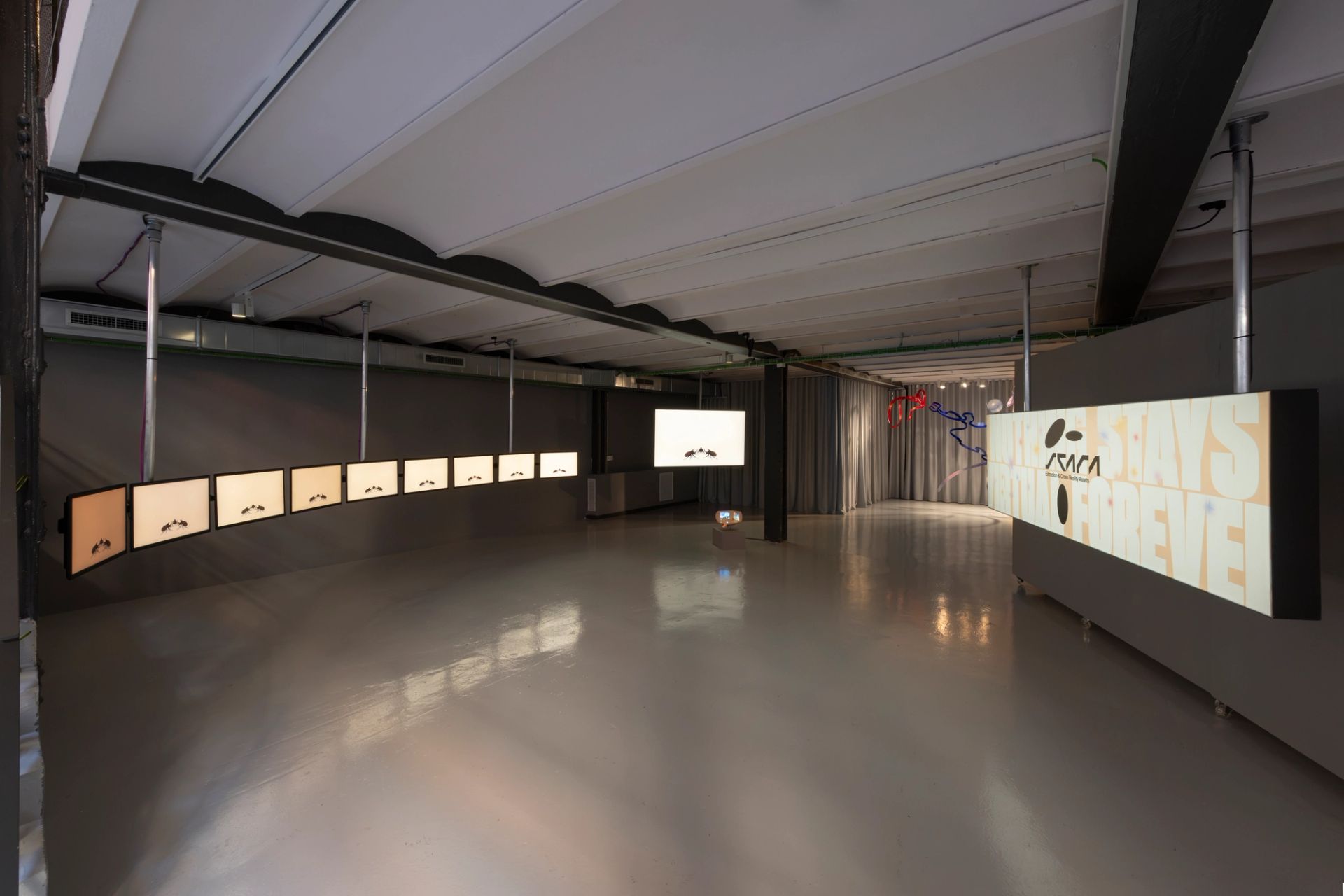
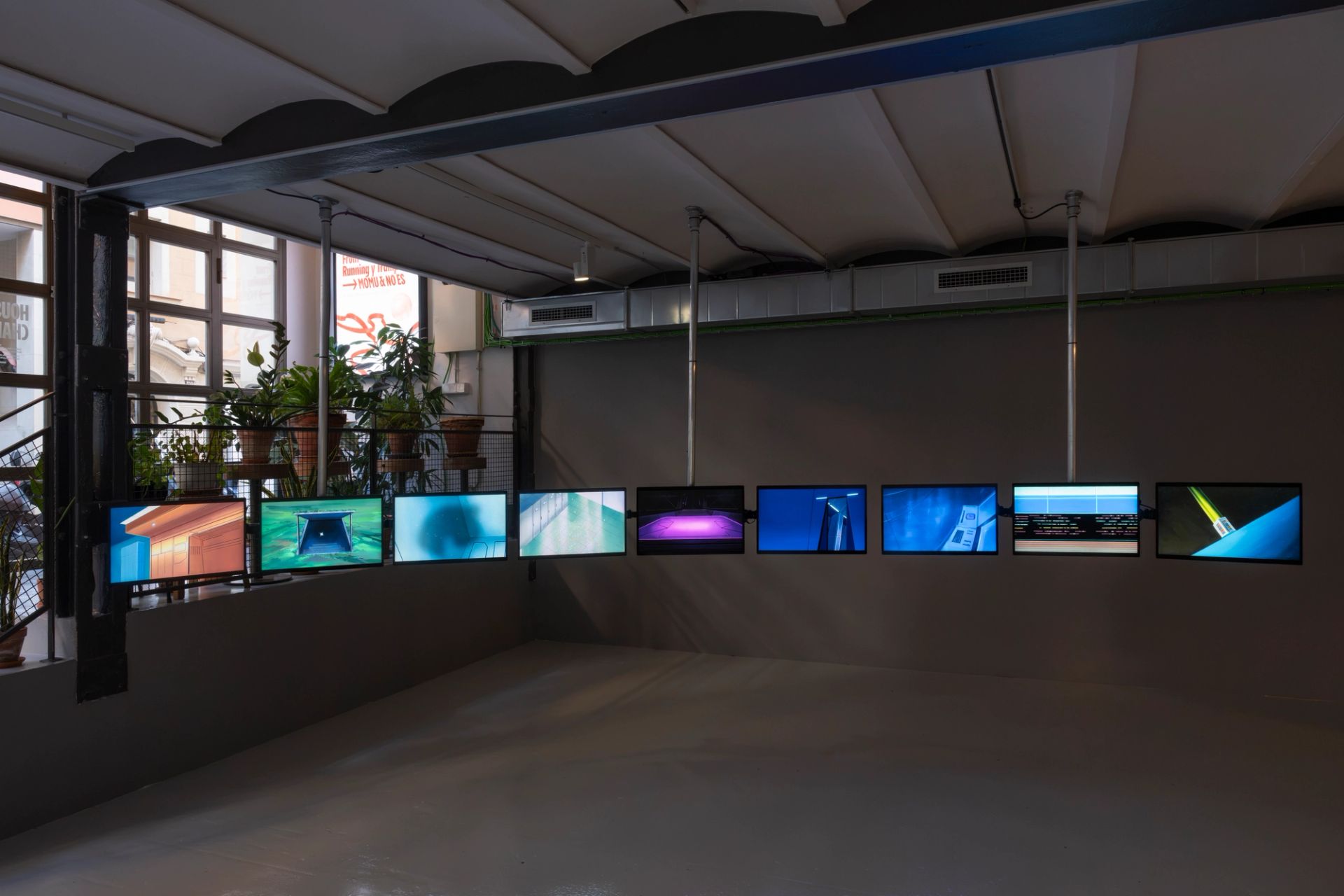
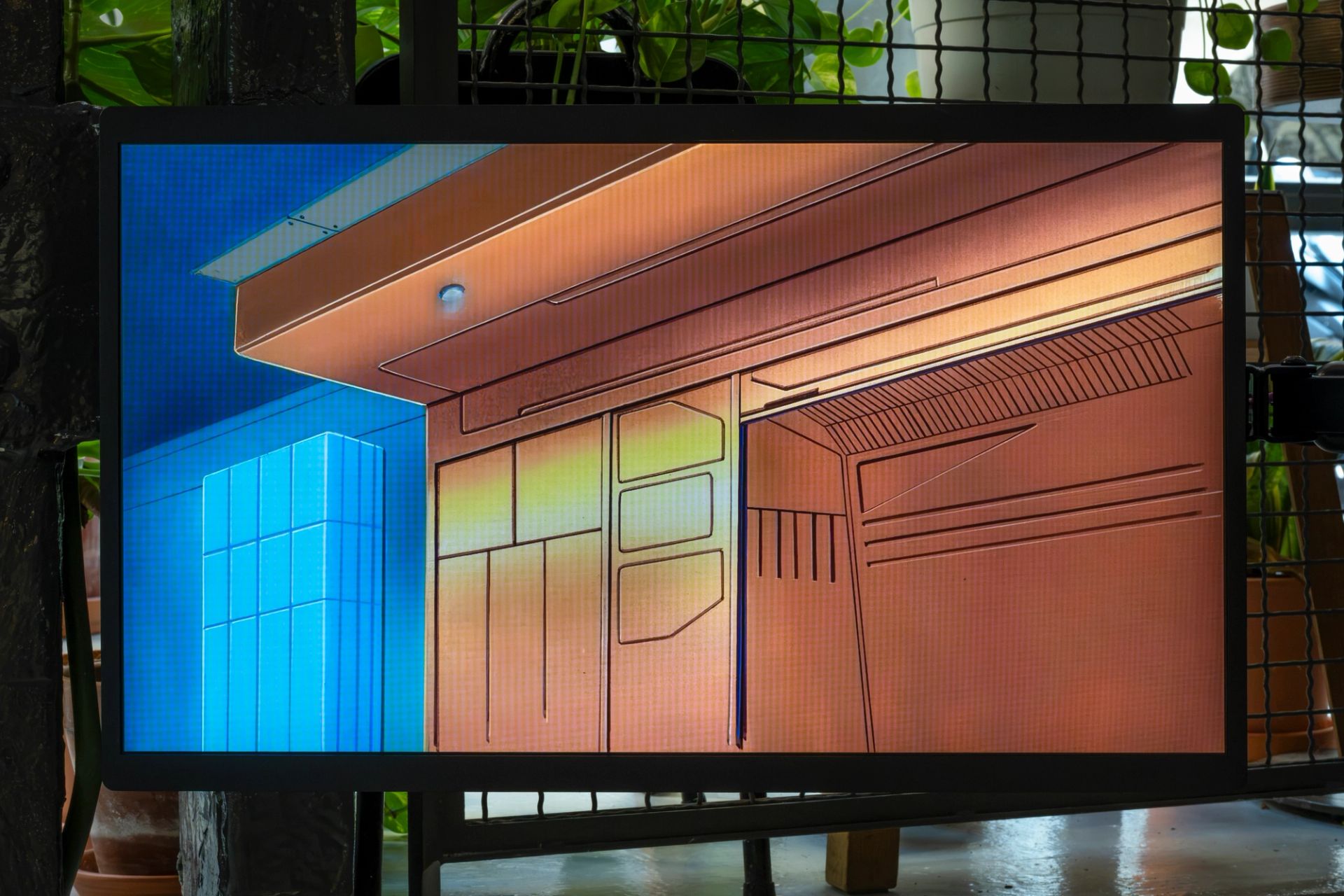
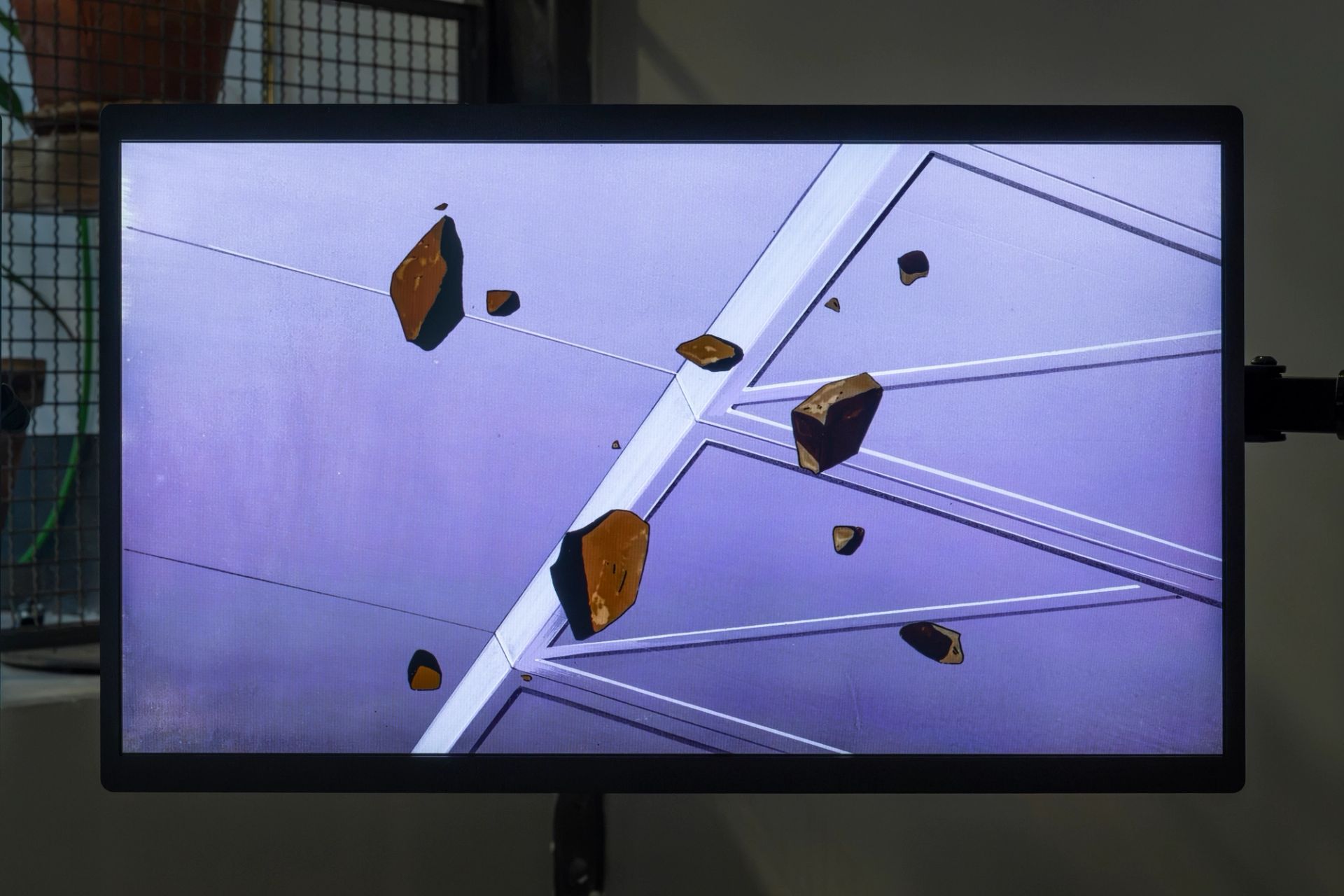
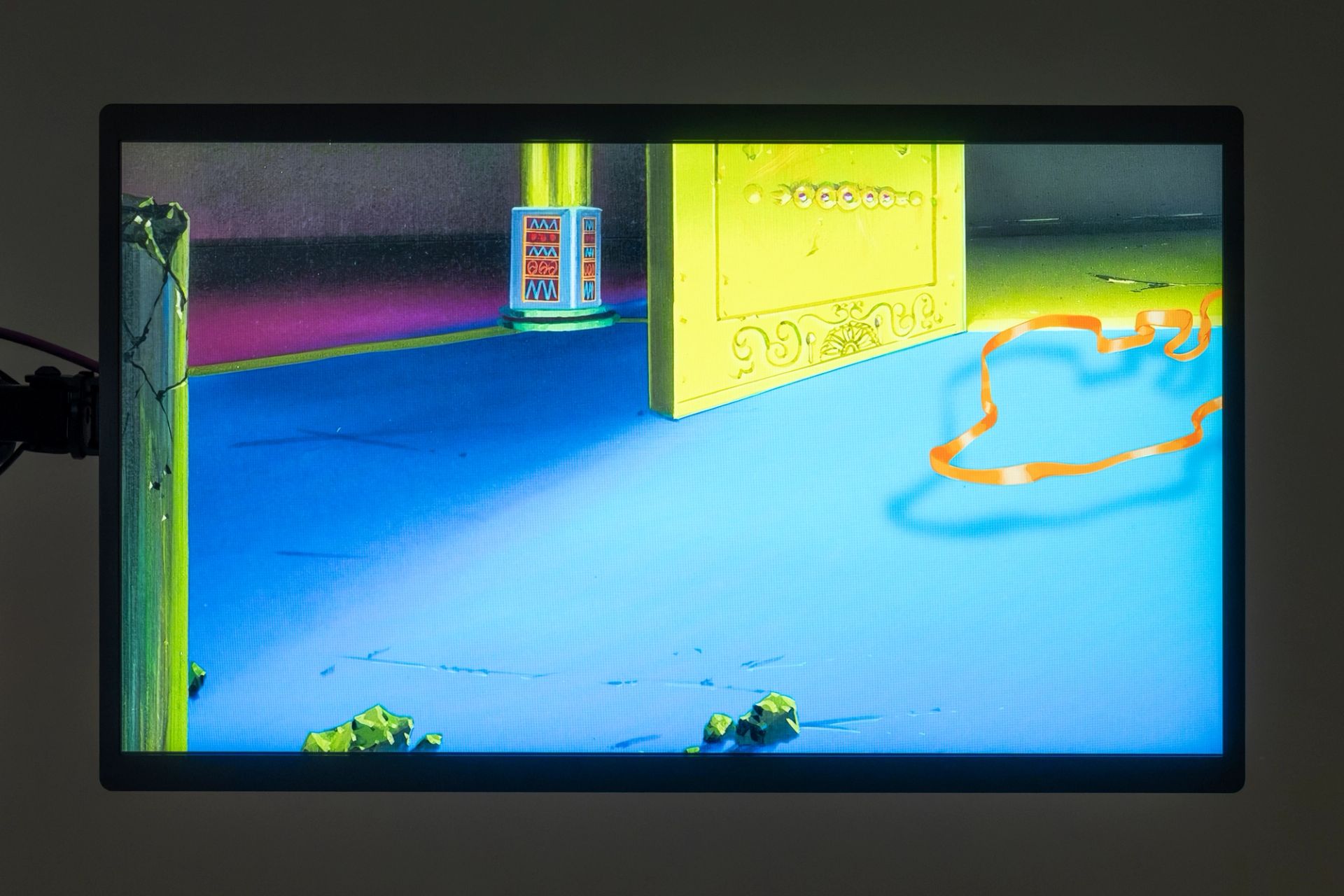
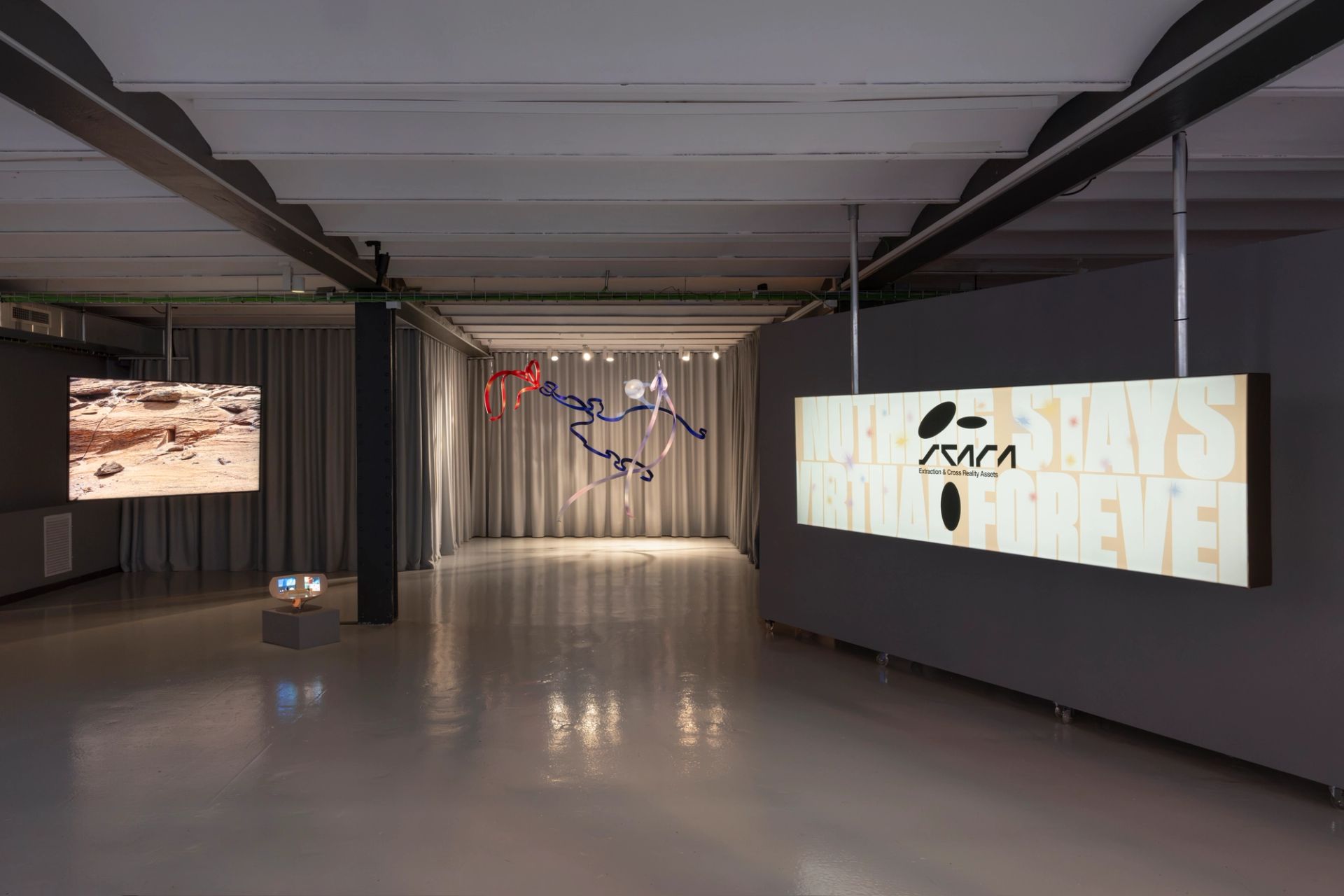
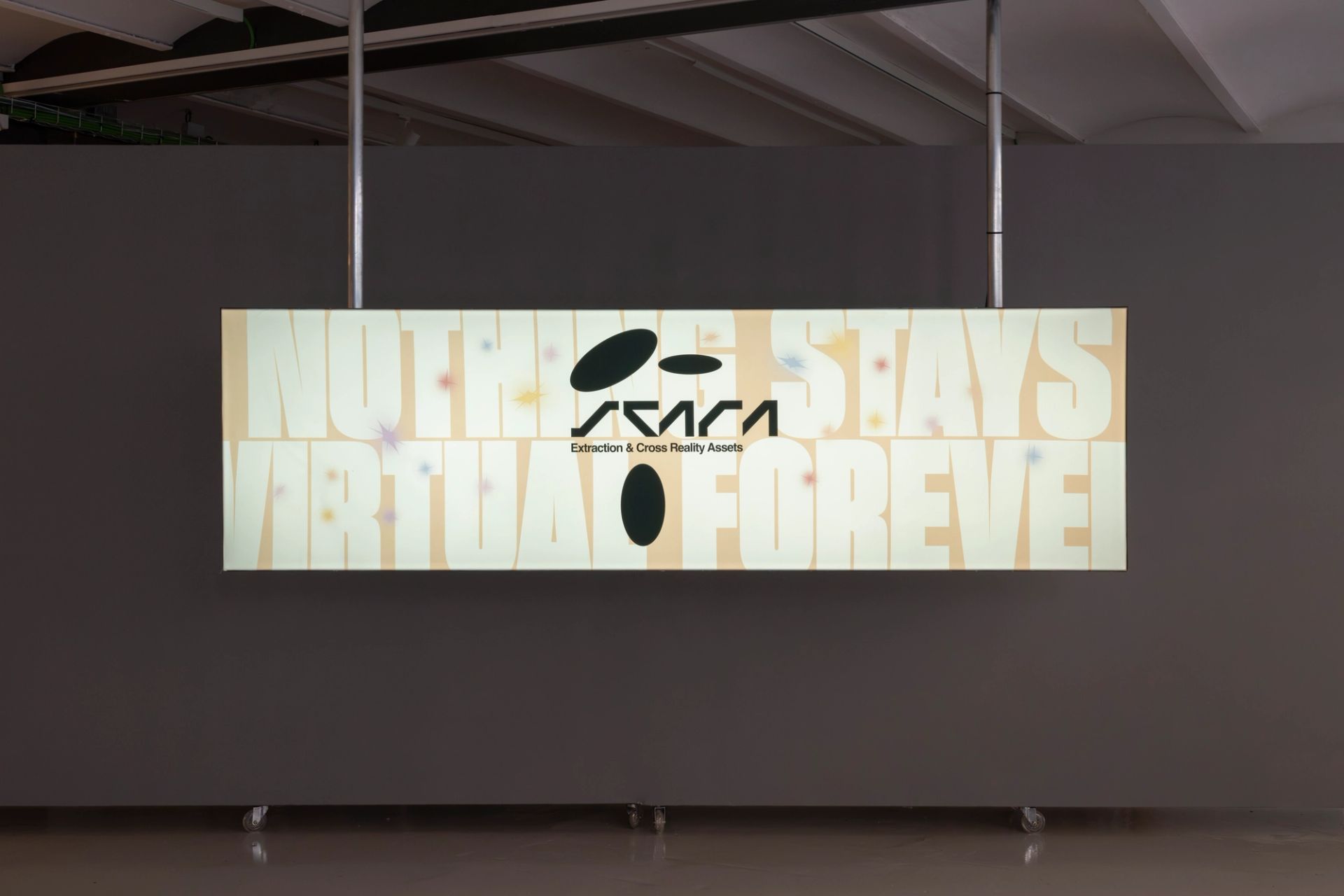
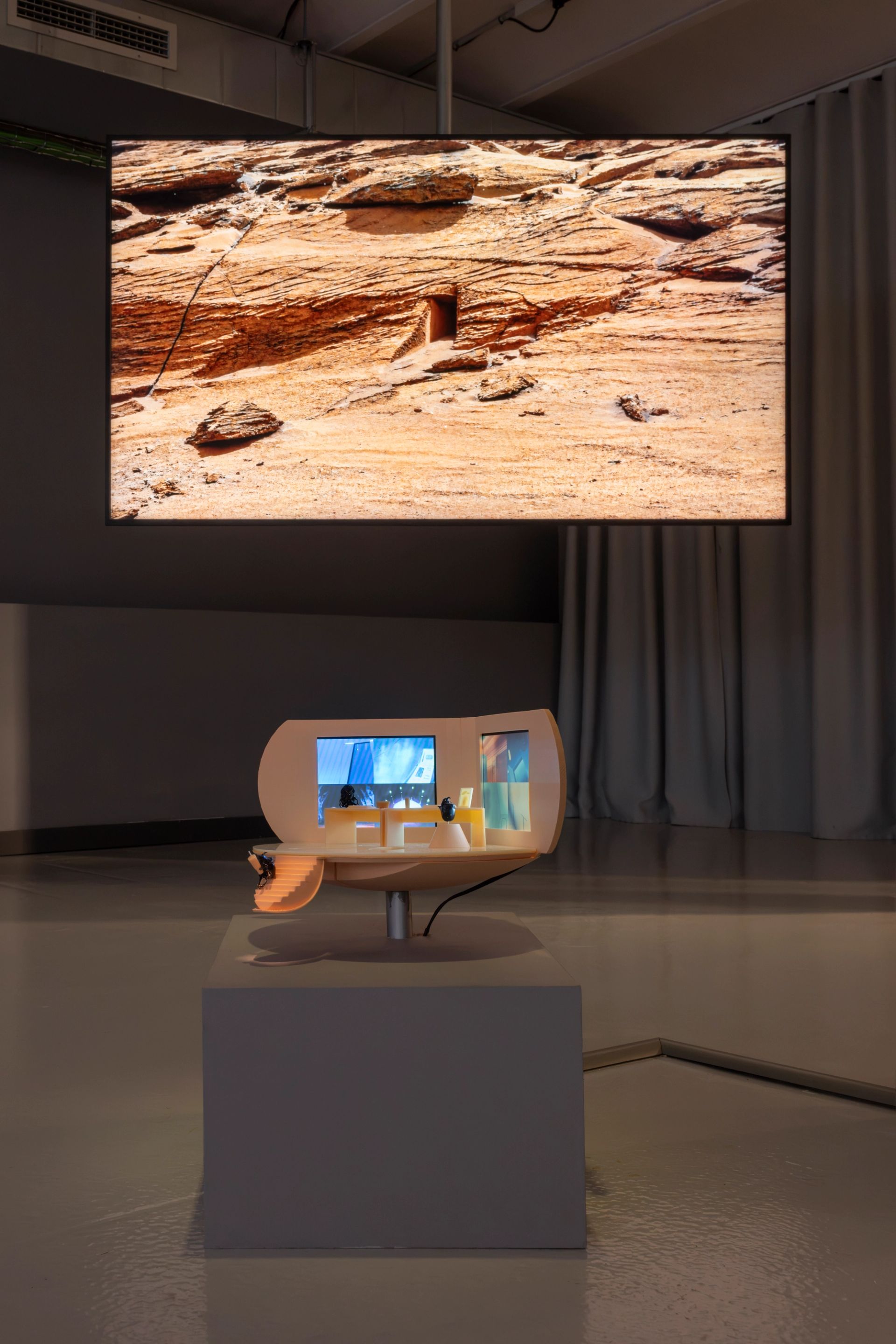
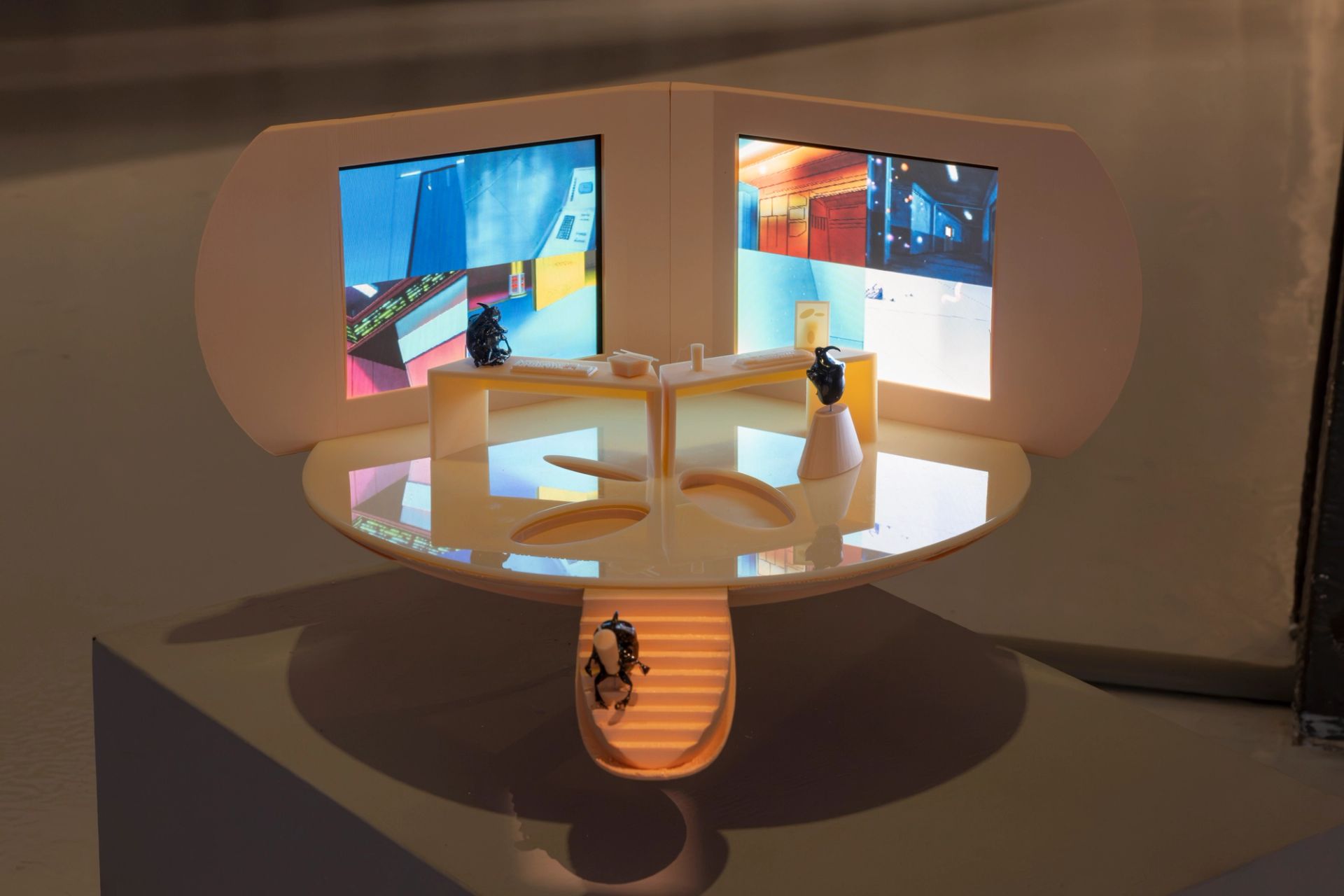
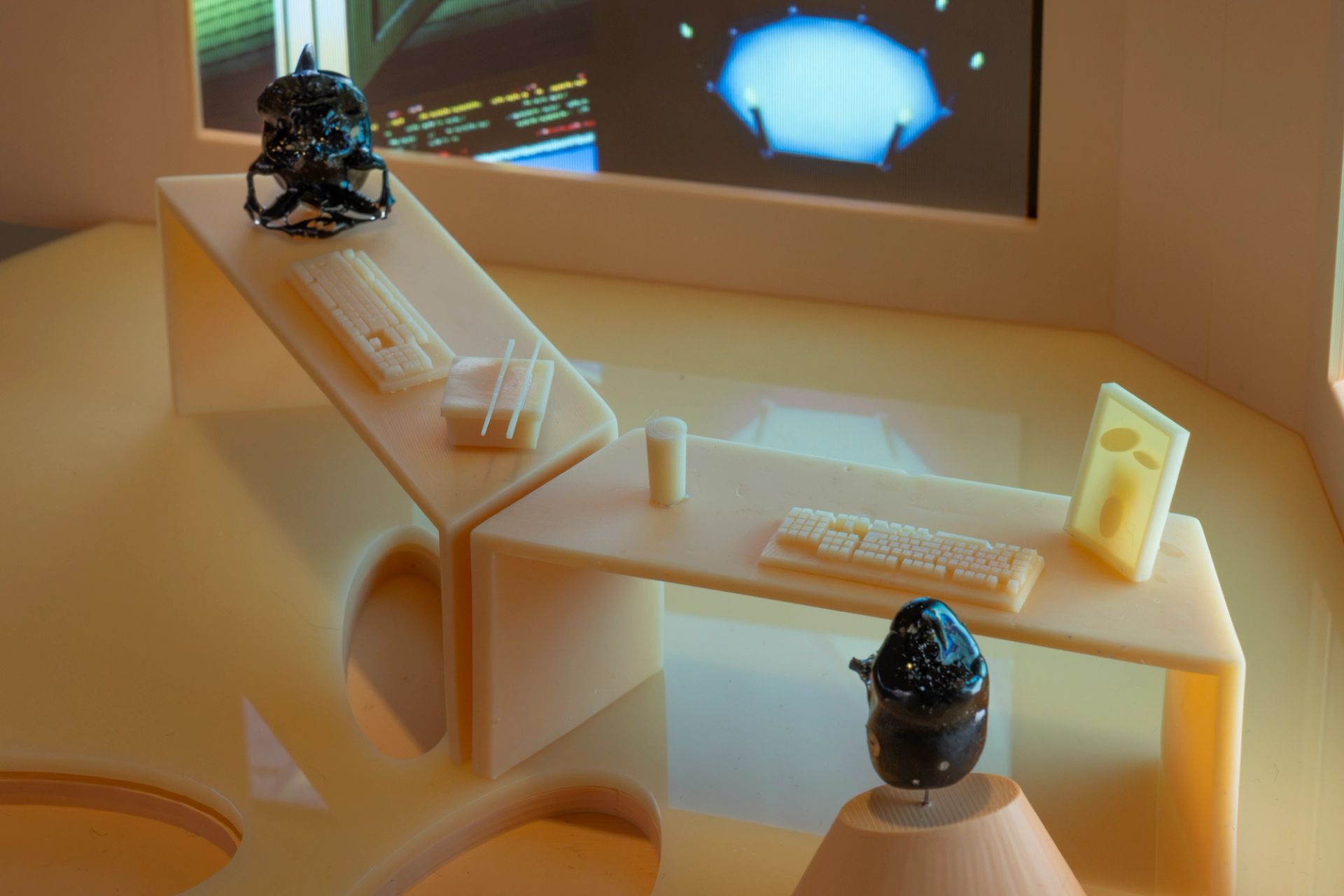
In SCARA, different objects from diverse origins are the subject of speculation. Three arthropod entities are tasked with scrutinising nine screens on which one of these objects may emerge at any moment. They cannot hesitate, they must not. Their function is not to analyse their meaning or, if there is one, their symbolism, but to determine whether they have any kind of value for exploitation. What they may not know is that they are not the owners of the prospecting company. What they may be unaware of is that their extractive universe could be governed by other entities, or by a protocol that, who knows whether obsolete, places the valuation of these objects in an infinite loop of value generation. In SCARA, value is not determined by the material meaning of the object; it dissolves in the continuous search for its detection, extraction, valuation... Perpetually hyperconnected, perhaps, the corporation’s entities monitor, process and select objects or certain anomalies emerging from the infinite flow of information, in a state of pure speculative pleasure. Perhaps. Or perhaps not.
Stories that make worlds. Hesitation
Each proposal by the collective Momu & No Es, formed by Lucía Moreno (Basel, 1982) and Eva Noguera (Barcelona, 1979), is an invitation to let ourselves be carried along by a story, to follow the thread, to explore or discover a universe. A fictional world that addresses us through its strange familiarity. Because there is always a sense, or premonition, of hesitation. A disturbance at the heart of the everyday.
On the fantastic, Tzvetan Todorov writes: “The person who perceives the event must choose between two possible solutions: either it is an illusion of the senses, a product of the imagination, and the laws of the world remain what they are, or the event really took place, it is an integral part of reality, and then this reality is governed by laws that we do not know. [...] The fantastic occupies the duration of this uncertainty. As soon as one chooses one answer or the other, one leaves the fantastic for a neighbouring genre: the uncanny or the marvellous.” (Introducción a la literatura fantástica, Paidós, 2006).
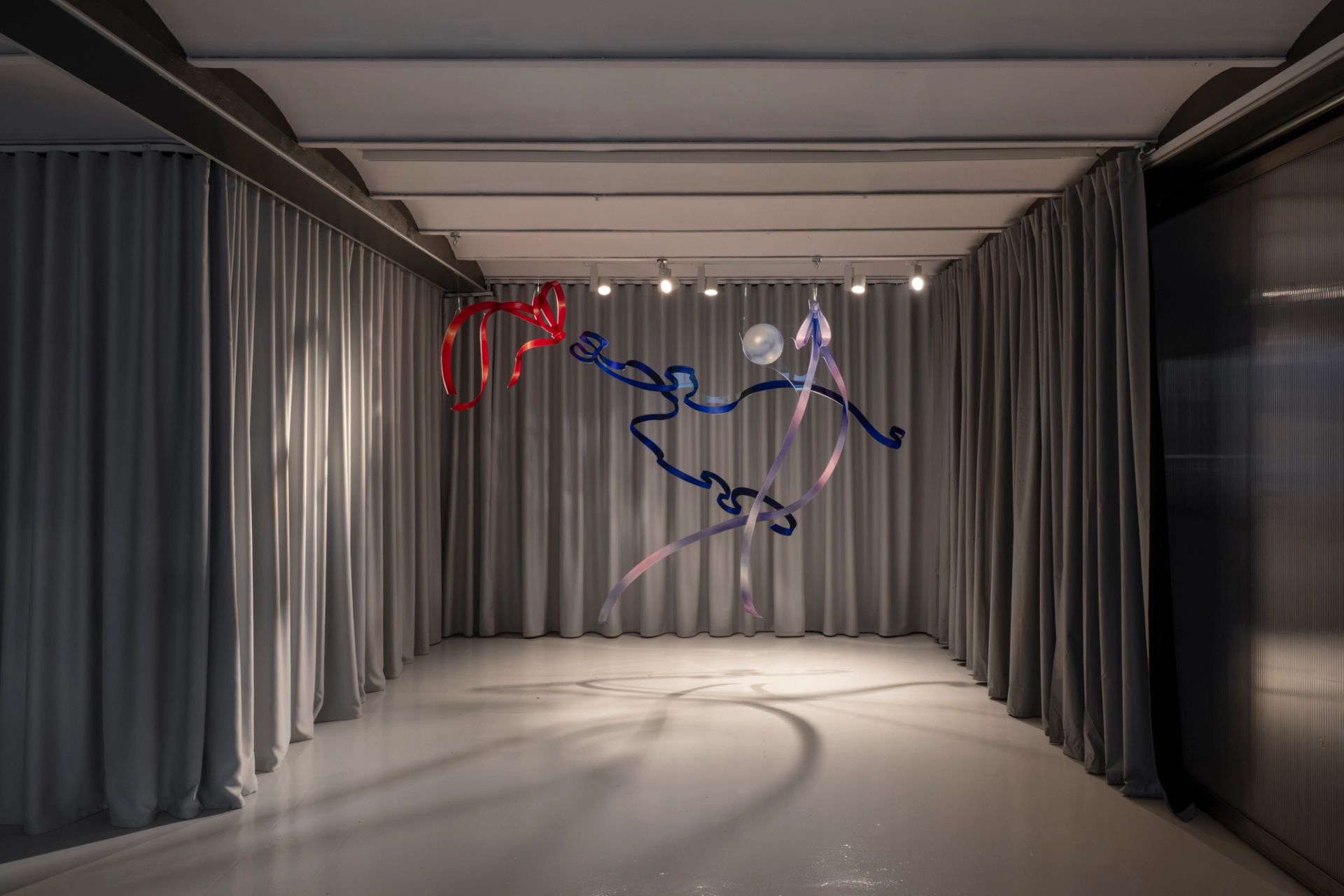
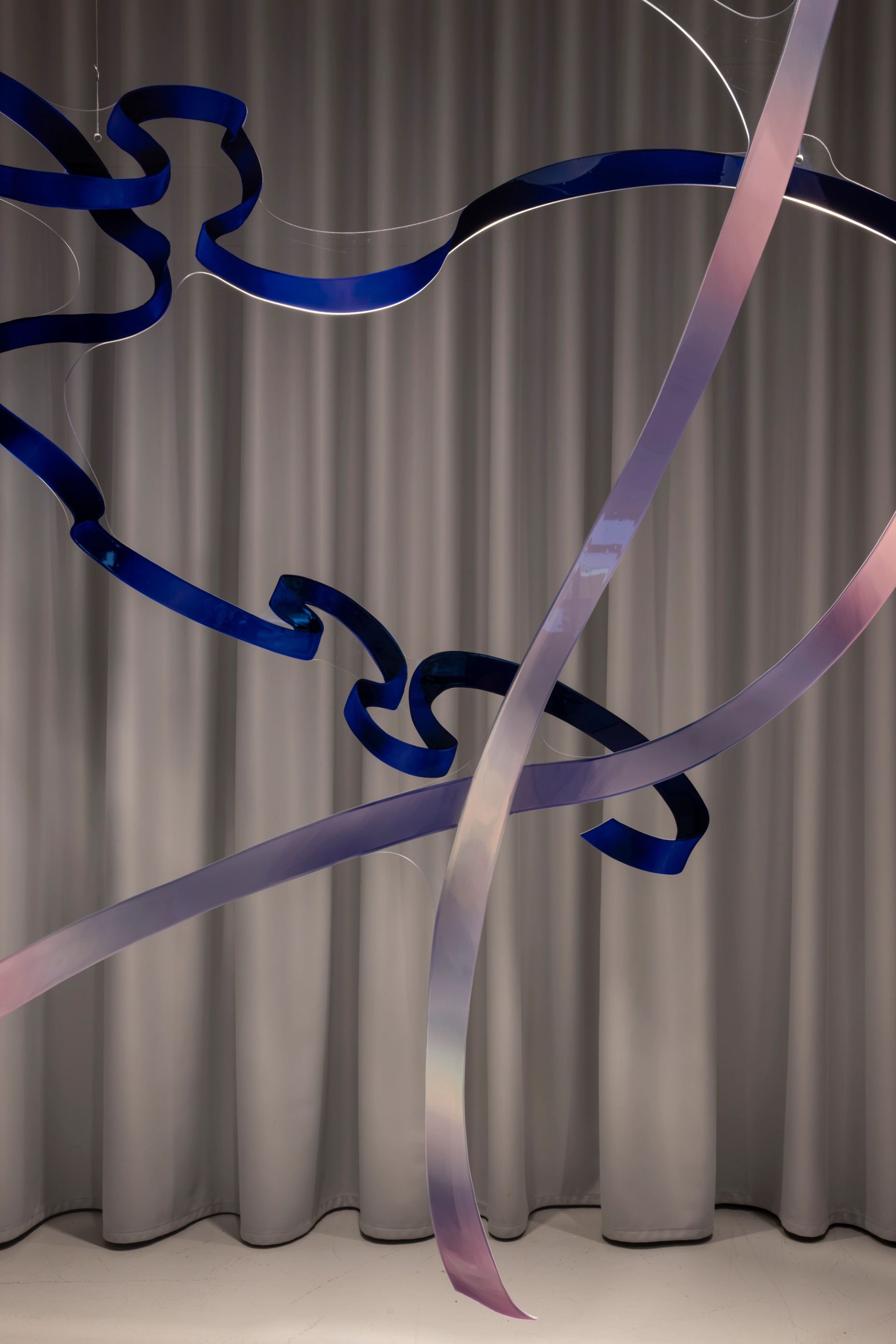
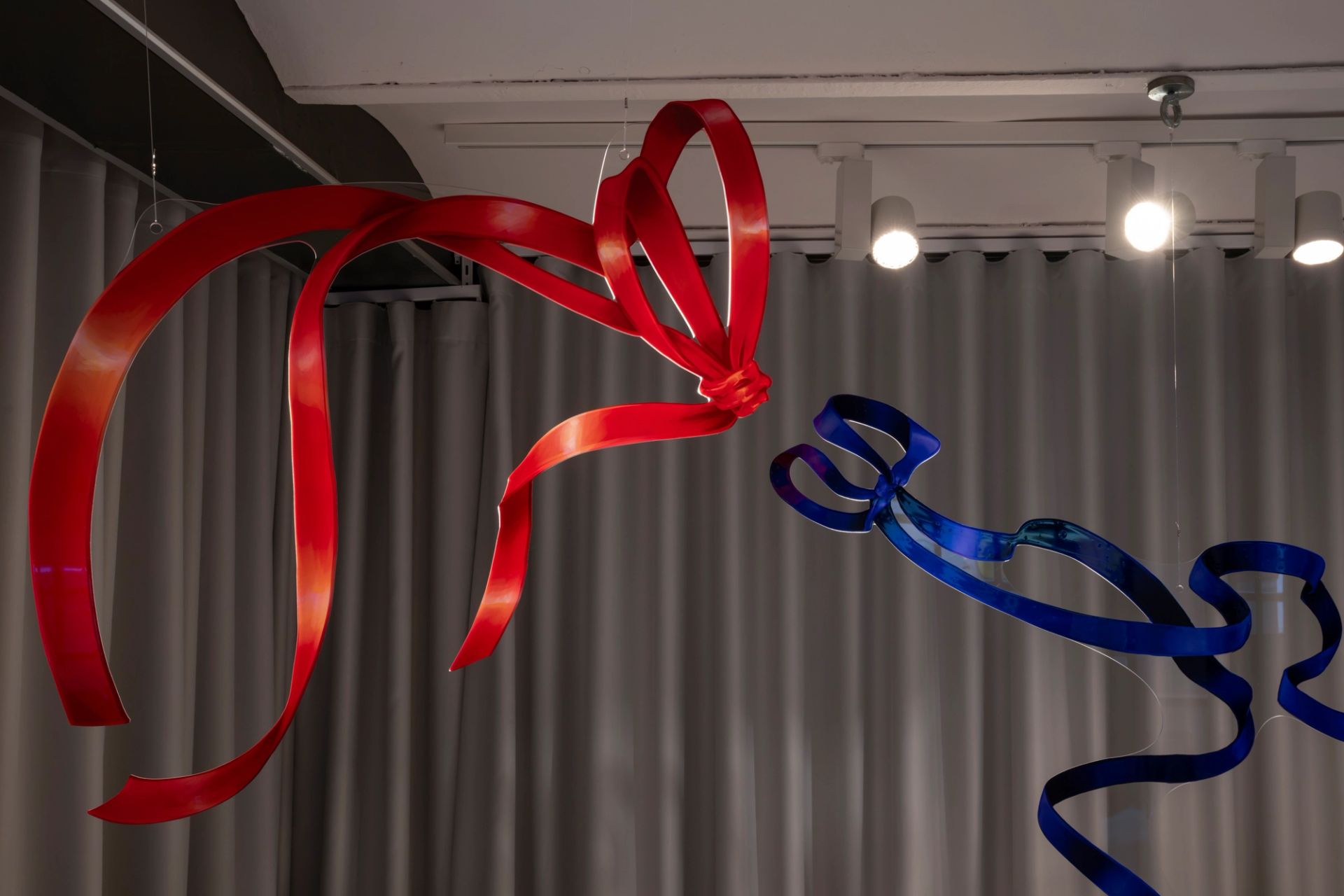
It is at this hinge, in this time of uncertainty, that I situate the artistic proposals of Momu & No Es. Within this hesitation, this text also fantasises, speculates, weaves itself and traces, observes and dances, drawing on different voices that bring stories and ideas together in order to think about the installations Front Running y Trampa at House of Chappaz.
Thoughts that think thoughts. Speculation
“We only warn (as if we weren’t already saturated with warnings) that capitalism is in a position that allows it to evade all the half-assigned and half-executed plots, weak, limp, arbitrary, that now bind it to social reproduction, literally happening right now, so as to leave behind our blistered and deforested earth and fold in on itself towards higher, more enclosed, smaller, thinner dimensions, until, poof!, we can no longer see it. What will we do then?”
Marek Poliks and Roberto Alonso Trillo, Exocapitalismo. Economías absolutamente sin límites (Caja Negra, 2026).
Three coleopteran creatures, positioned in front of nine screens, speculate on the images projected on them. The first definition of the verb “speculate” in María Moliner’s Diccionario de uso del español is: “to examine something carefully in order to study it”. The second, which Moliner identifies as “and more frequently used”, is: “To think or reflect on theoretical questions. To make conjectures about something”. In the third, valuation enters the picture: “To trade or negotiate in something”. It already hints at the use of “a certain thing for profit or advantage”. Finally, speculation leaves the realm of reflection and is defined as “to take advantage, to traffic”. What catches my attention is the sentence preceding this definition, the example given for this meaning: “He speculates with his knowledge of the intimacies of the house”.
From examination, from the world of ideas, in a single definition María Moliner leads us to the “intimacies of the house”. And, moreover, to taking advantage of something, which resonates with the stock-market connotation of the term front running. Someone speculates, taking advantage of their position. They inhabit a speculative hesitation. What if there were speculation without return? What if...? I think of my reading this week, alongside the writing of this text, of Marek Poliks and Roberto Alonso Trillo’s Exocapitalismo. What if... in an infinite loop of “buy, hold, sell, buy”... capitalism were caught in such a deranged fold and unfolding that it became endless speculation, an infinite speculative loop? “It is no longer only the consumer who ‘owns nothing’: annualised income represents a dispossession of the real income of the business in favour of speculative income.”
Related exhibitions
This Fucking Name Christto & Andrew,Andrew Roberts,Aggtelek,Diego del Pozo Barriuso,Fito Conesa,Momu & No Es,Natacha Lesueur,Ovidi Benet,Pablo Durango
From March 11 to June 30, 2022
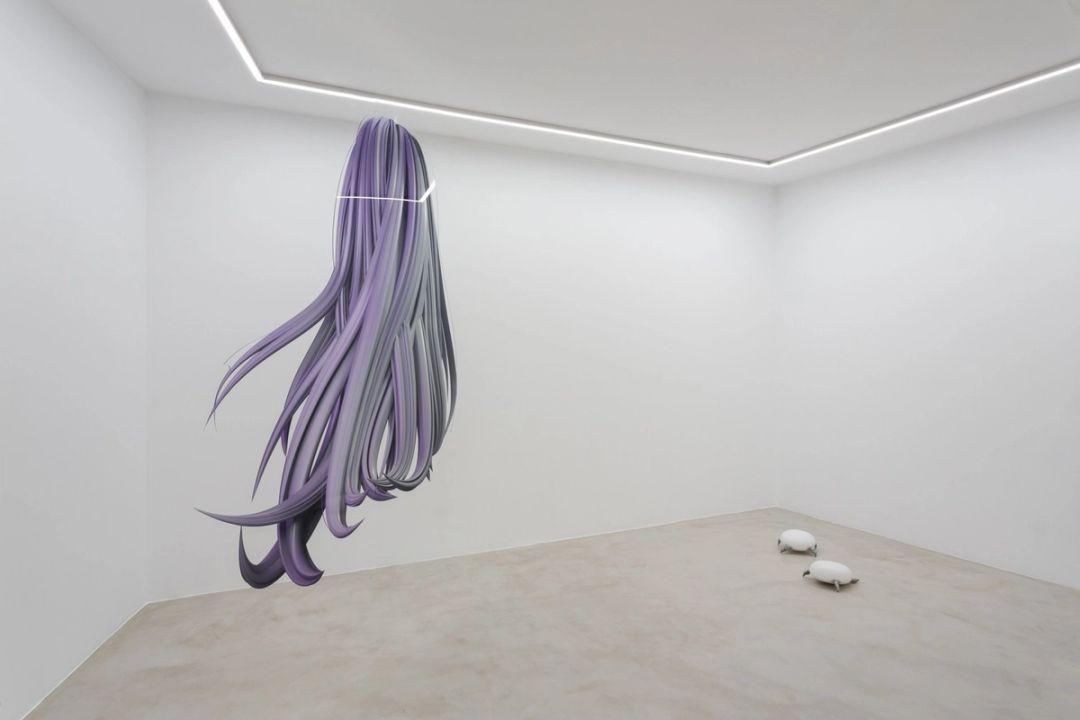
F.A.T.A.L. Momu & No Es
From December 10 to February 17, 2022
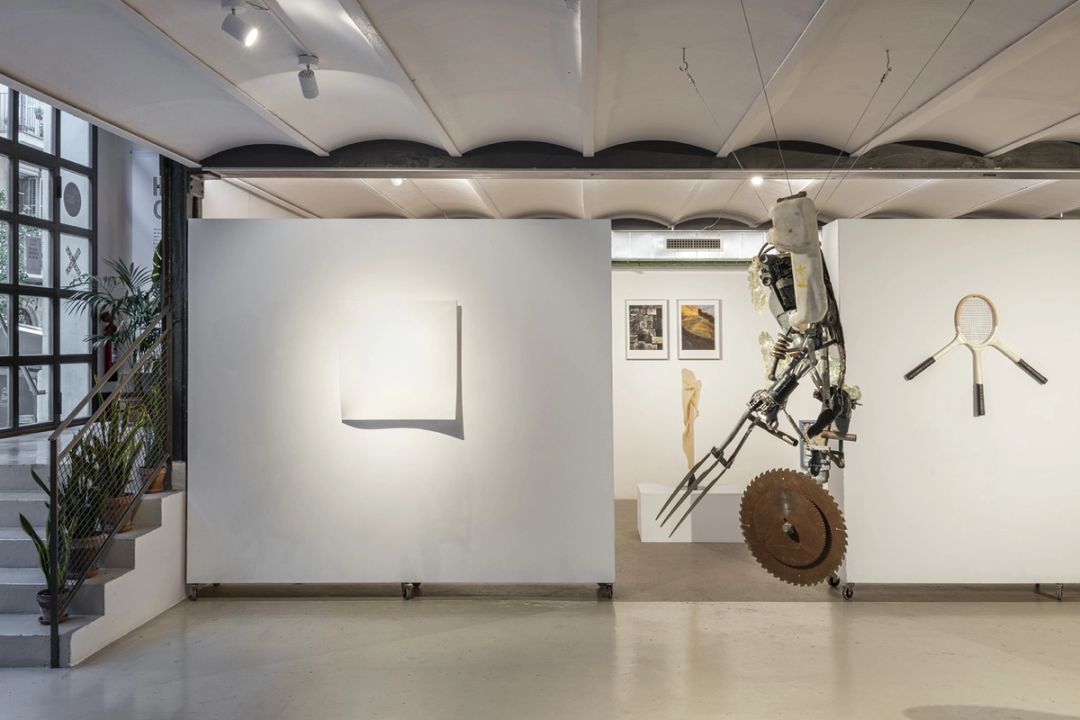
Mixtape Vol. 1 Christto & Andrew,Carlos Sáez,Antonio Fernández Alvira,Antoine et Manuel,Andrew Roberts,Aggtelek,Diego del Pozo Barriuso,Fito Conesa,Michael Roy,Mit Borrás,Momu & No Es,Natacha Lesueur,Ovidi Benet,Vicky Uslé,Octavi Serra,Sarah & Charles,Carmen Ortiz Blanco,Pablo Durango
From September 15 to November 25, 2022
Artist fairs
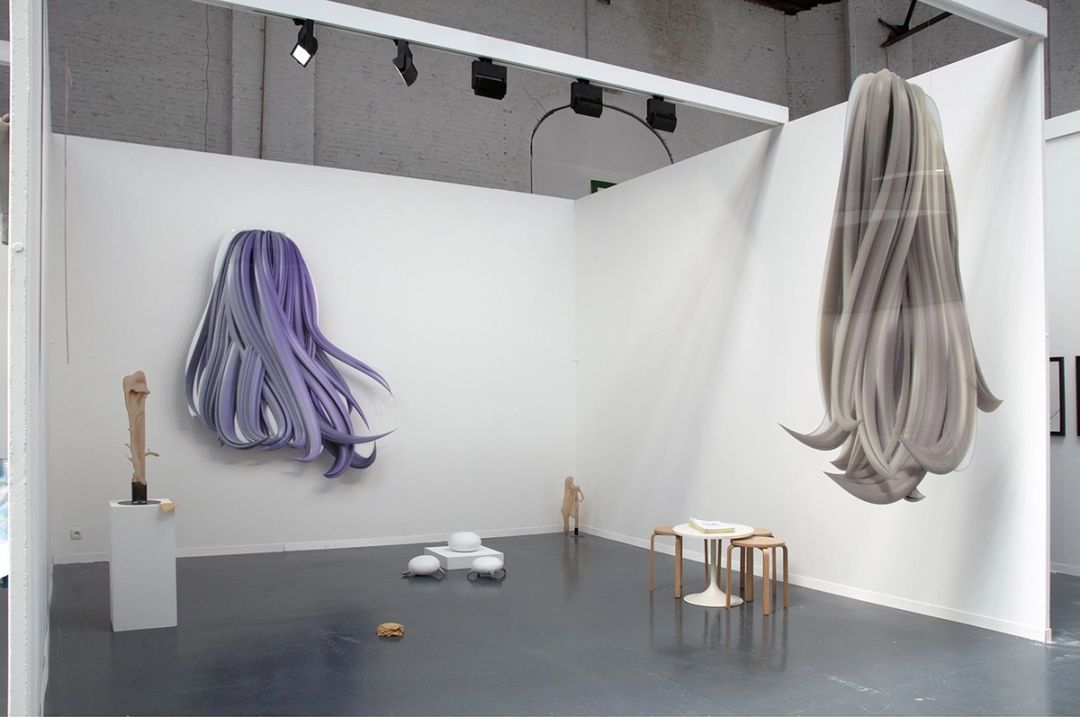
ART BRUSSELS 2022 Momu & No Es
From April 28 to May 1, 2022
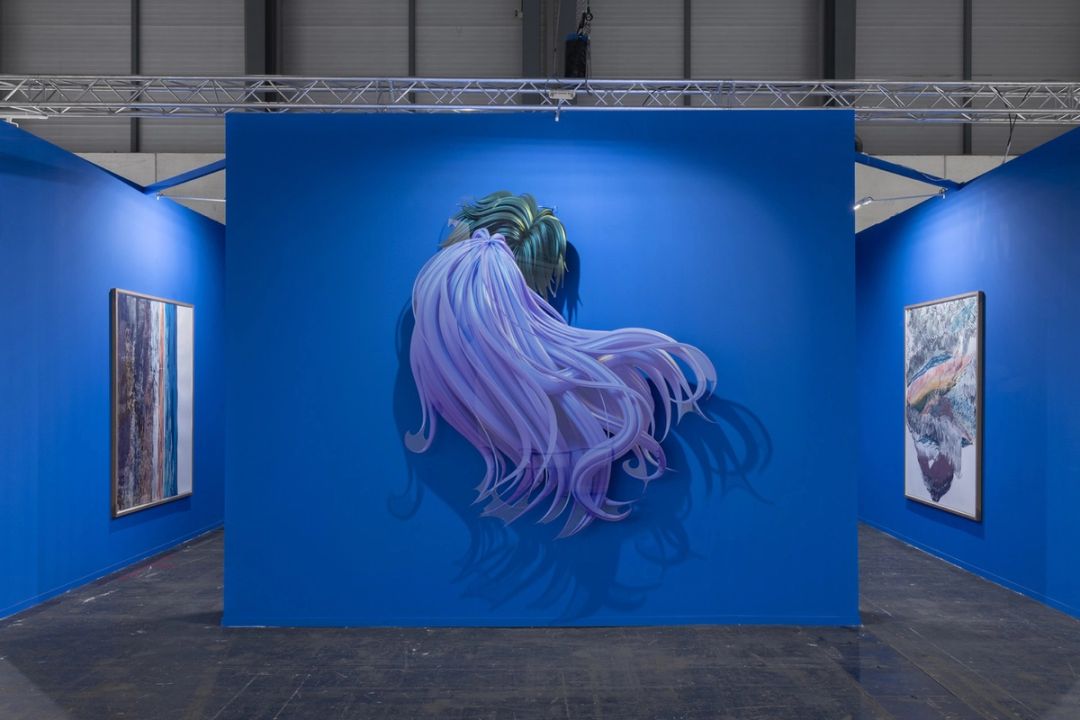
ARCO Madrid 2023 Momu & No Es,Vicky Uslé,Anna Moreno
From February 22 to February 26, 2023
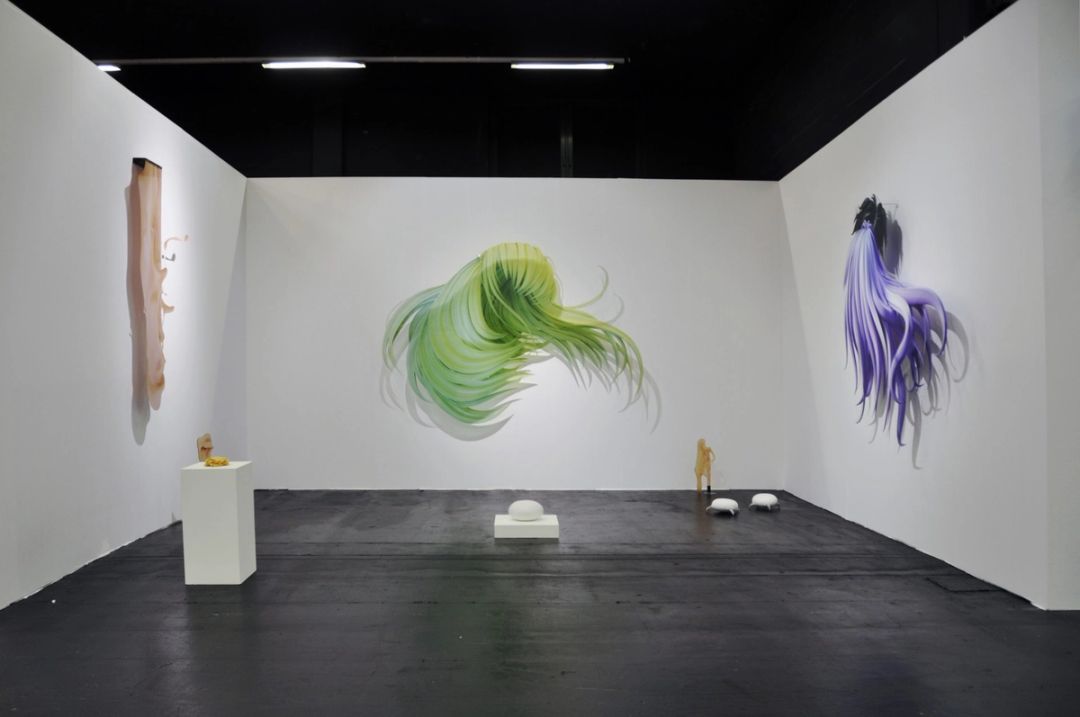
ART COLOGNE 2022 Momu & No Es
From November 16 to November 20, 2022